You might be familiar with Bob Ross. He hosted a long-running show called The Joy of Painting, and he showed countless aspiring artists how to get started in the art form. He was steadfastly convinced that anyone could learn to paint.
“All you need is the desire to make beautiful things happen on canvas,” Ross would say. On his show, he painted along with his audience, gently demonstrating techniques and always reminding viewers that in the world of their painting they could make a cloud or tree or what have you just the way they wanted it.
Ross had a low-pressure approach—an approach that some thought of as corny—that no doubt helped many viewers overcome their reluctance to give something new a try. If this man with the big hair and the soft voice said you could paint and find joy in doing so, well, maybe you actually could.
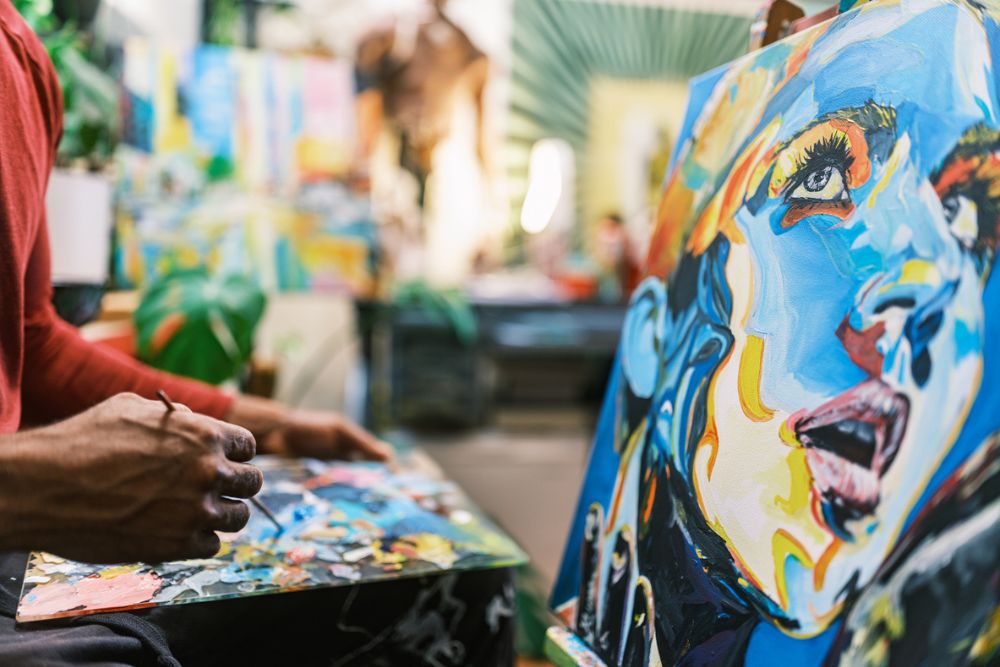
Why are we talking about Bob Ross? Well, it turns out that the visual arts can be a boon to your ongoing recovery from a substance use disorder. Let’s pick up our paintbrushes and take a look at why that might be.
Some Therapeutic Benefits of Visual Arts Therapy
Sometimes, we all struggle to express ourselves. We have trouble staying on top of anxiety and stress, and we feel on edge about everything. And through all of these, we are not always terribly self-aware, which can lead to intense feelings of failure.
Participating in artistic expression can help in all of those areas.
The visual arts provide an opportunity to express your feelings—any feelings—in a way that is deeply personal to you. Sometimes it is hard to say something out loud. Art can help you find a different way to say what you are feeling.
It is also the case that participating in an arts activity like painting calms your nervous system, lowers your stress hormones, and fires up the reward system in your brain in a substance-free way. The practice of painting can help you get in better touch with yourself and learn patience for those moments when your painting—and your life—are not going so smoothly.
A Variety of Creative Exercises and Possibilities
We could recommend you rustle up some old Bob Ross material—online or elsewhere—and just paint along with him to your heart’s content. It actually is not a bad suggestion. But sometimes, nature scenes, like the ones Ross most frequently painted, are not quite what you need.
You might, for example, choose to draw or paint a place where you feel wholly safe. It might be somewhere real, or it might be imaginary. Either way, creating an image of it gives you time to reflect on why it makes you feel safe. Use different colors to represent the various emotions you are feeling at any given moment and keep those colors in your mind as you go through the day. How would your painting change right now compared to an hour ago? You might create colorful mandalas that could be part of your mindfulness practice or simply good reminders of beauty in the world—and your ability to provide some of that beauty.
When you are feeling particularly tense, the physical act of working with clay can be helpful. And it can provide the same sorts of benefits listed above—helping you explore what makes you feel safe and what emotions are bubbling to the surface.
Getting to the heart of your emotions and finding a creative outlet for your stress are powerful practices when you are in recovery from a substance use disorder.
Advantages of Art Therapy
We have mentioned some of the positive things you might experience if you take up an artistic practice, but we want to take an even deeper dive here. Here, then, are some ways diving into the visual arts can make a big splash in your recovery:
- Supporting self-discovery while boosting self-esteem and confidence
- Reducing feelings of stress and anxiety
- Providing a distraction from your troubles—including, for example, cravings
- Facilitating a spirit of reflection and growth
- Creating an opportunity for connection that can lead to a supportive community
- Replacing harmful habits—including but not limited to substance use—with positive behaviors
Help You Start Your Recovery Is Both Art and Science
When you think about getting treatment for a substance use disorder, you may have a cold and clinical image in your mind. And it certainly is the case that treatment for a substance use disorder requires some science and some evidence-based practices to be effective. But treatment is not just a science. You can also think of it as an art.
The staff at Bel Aire Recovery Center—located near St. Louis, Missouri—is invested in listening to your individual story and creating a treatment plan that is responsive to your specific needs. While our years of experience and high levels of expertise might lean to the science side, our carefully created ethos of empathy is more of an art as we ensure you are never judged during your stay at Bel Aire.
When you are ready to make a lasting change in your life, we will help you design a beautiful future.