
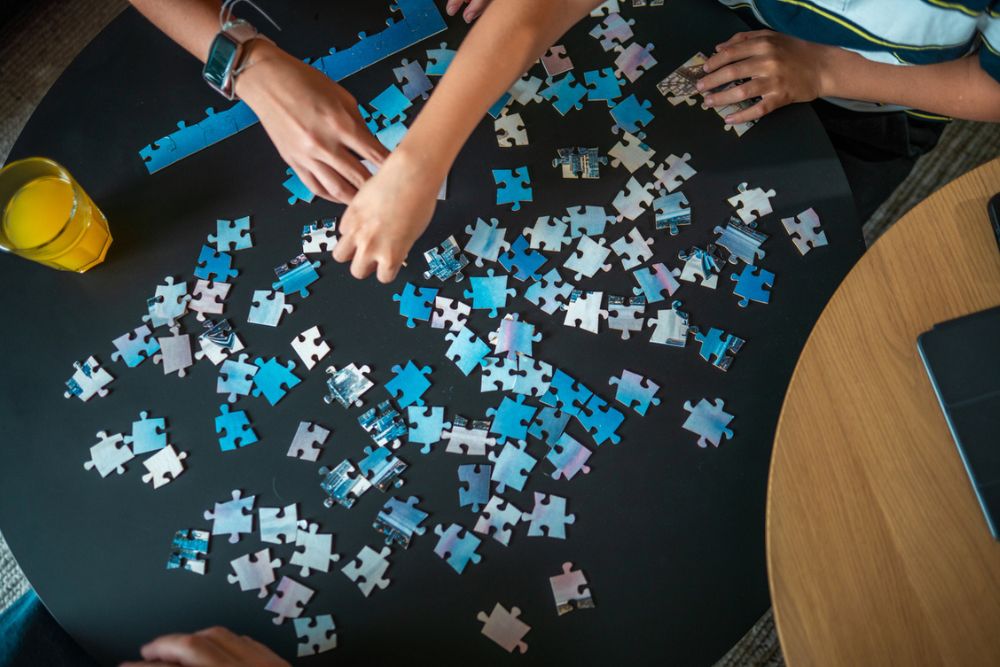
According to a report from 2019, nearly half of Americans complete at least one jigsaw puzzle each year. We suspect that the 2020 pandemic increased that number—at least for a while. Perhaps you count yourself among the many folks who enjoy putting puzzles together as a way to relax or to spend time with others or both.
Even if you are an avid puzzler, you might think that jigsaw puzzles have little to do with your recovery journey (beyond, perhaps, serving as the kind of hobby we often encourage you to pursue). We would like to suggest, however, that jigsaw puzzles offer some hidden lessons that can be applied to recovery from a substance use disorder.
Let us put the pieces together.
Different Approaches Can Achieve the Same Goal
Many jigsaw puzzle fans start by finding all the edge pieces and putting the frame of the puzzle together. Others divide the pieces into groupings based on what part of the puzzle they appear to be a part of and work from there. Some people like to organize the pieces by shape. There are solvers who rely on the picture on the box a lot and others who prefer to set the image aside and just work with the pieces. There are even people who put puzzles together with the pieces upside down—and people who find puzzles with the same cut and make pretty amazing mashups.
No matter your preferred technique, the end goal stays the same. You are trying to finish the puzzle. That is true whether you try to finish puzzles quickly or have a more leisurely approach. It’s true whether you do 100-piece puzzles or 500-piece puzzles or 1,000-piece puzzles (or even bigger!).
When it comes to recovery, folks can have different approaches, too. Sure, there are some fundamentals: go to meetings, take care of your physical and mental health, build and maintain a strong support system, and so on. But each individual in recovery is doing it their own way with their own routines and approaches that serve them well. In every case, however, the goal is the same for everyone. You are working to keep your recovery intact.
Sometimes Things Can Get Frustrating
Even experienced puzzler aficionados can find themselves frustrated when it seems like the pieces just will not come together. That frustration can make the puzzle feel like a chore rather than something fun. Stress levels can go up rather than coming down.
When that happens, it is probably time to take a break. Returning with fresh eyes can help you get through a rough patch. So, too, can asking someone else to take a look. Sometimes a person looking at the challenge from a fresh perspective can help you get past the tricky spot.
These sorts of frustrations can arise in recovery, too. Even when you are sticking to your strategies and routines, you might find yourself experiencing cravings, high stress levels, or other challenges that could put your recovery at risk.
If and when that happens, it is time to step back and get reset (turns out, our reset advice includes…working a puzzle)—and it might be a good idea to contact a trusted member of your support community who can help you weather the challenge. Just as with a jigsaw puzzle, another person might be able to come in, help you see things in a different way, and get you back on track.
Patience Is a Virtue—And a Necessity
While some puzzles come together quickly, most take a fair amount of time. Keeping that in mind can help a puzzle fan decide how much time to set aside or whether to break the project into multiple sessions. Sometimes, things might seem to be going far slower than you would like. Approaching the project with patience can make it much more enjoyable.
Patience is important in recovery, too. As much as you might wish that finishing treatment would mark the end of any challenges related to drugs or alcohol, it generally does not work out that way. Being patient with yourself and the ongoing recovery process is essential to your peace of mind—and to your ongoing success.
Another Look at Puzzles as a Recovery Metaphor
We used puzzles of various sorts—including jigsaw puzzles—as a way to think about recovery in this previous blog post. Take a look if you find puzzles a useful metaphor for thinking about your recovery journey.
No Need to Puzzle Out Where to Get Help
Bel Aire Recovery Center, located near Wichita, Kansas, has recently been recognized as one of the top substance use disorder treatment facilities in the country. We help people solve the puzzle of ongoing substance use through our medically supervised detoxification program and a robust approach to rehabilitation that includes treatment for co-occurring mental health disorders.
When your time in treatment comes to an end, our alumni program keeps you connected to Bel Aire’s staff and to other alums who understand the journey you are on because they are travelling on a similar road. The mutual support available via the alum program can be a true source of comfort and encouragement.
Are you ready to make a transformational change? We are ready to help you reach your goals.